
Operations
Talc processing
Processing turns sorted talc lumps into mesh powder of a consistent particle size. The lumps are crushed and screened, ground in hammer and Raymond mills, and classified to the target fineness. The powder is then tested and packed in 25 kg bags or jumbo bags. Grinding happens at two meshing plants in Hayatabad Industrial Zone, Peshawar.

Process flow
Eight stages from lump to loaded bag
Choose a stage to see it on site. Full detail for each stage follows below.
Lumps are received, stockpiled and kept separate by grade.
Learn more about intake & segregation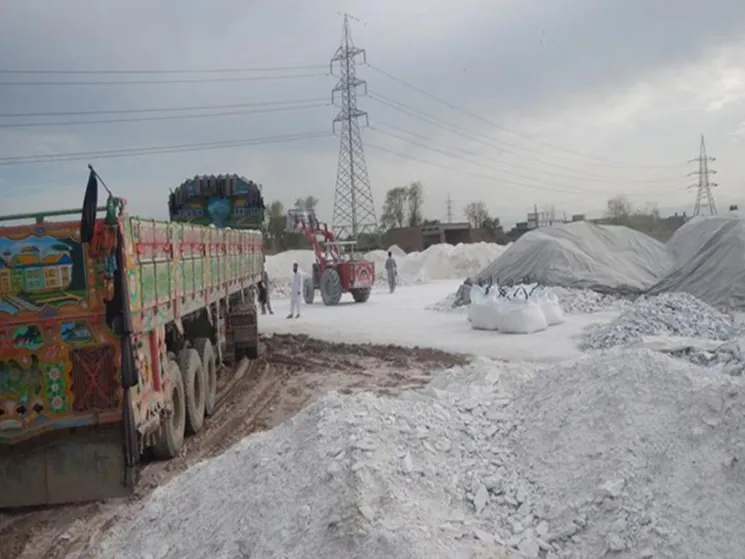
Lumps are reduced to a uniform feed size.
Learn more about crushing & screening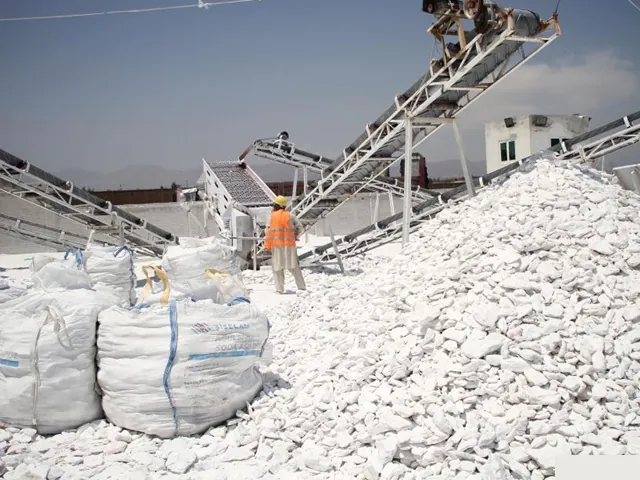
Hammer mill and Raymond mill lines produce mesh powder.
Learn more about grinding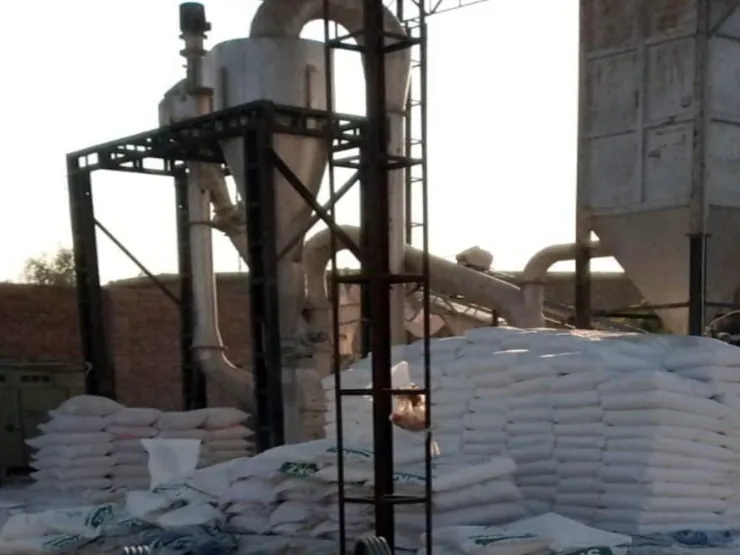
Air classifiers cut the powder to finer particle sizes.
Learn more about classification & micronizing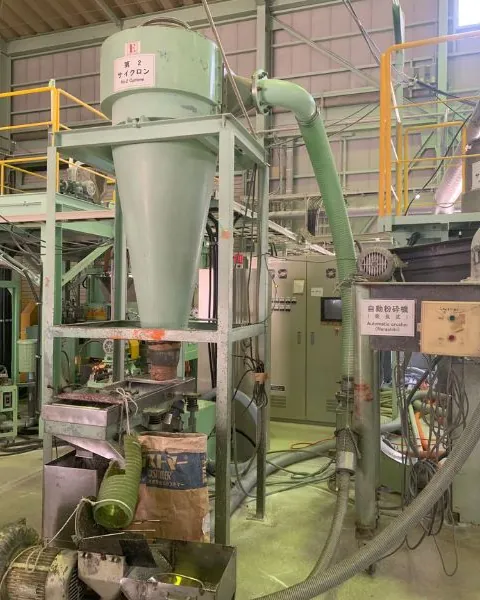
Cyclones and collectors keep powder in the process and out of the air.
Learn more about dust collection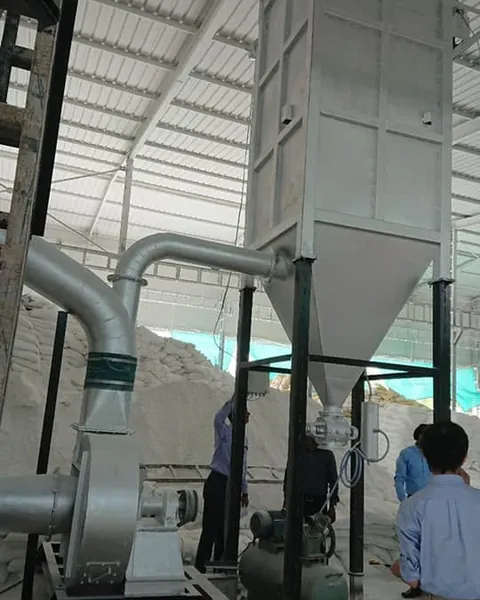
Samples go to SKZ Laboratory Peshawar.
Learn more about testing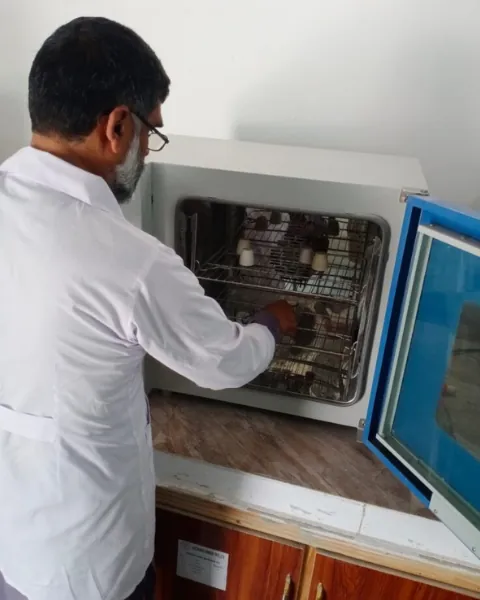
25 kg bags and jumbo bags, filled under dust collection.
Learn more about packing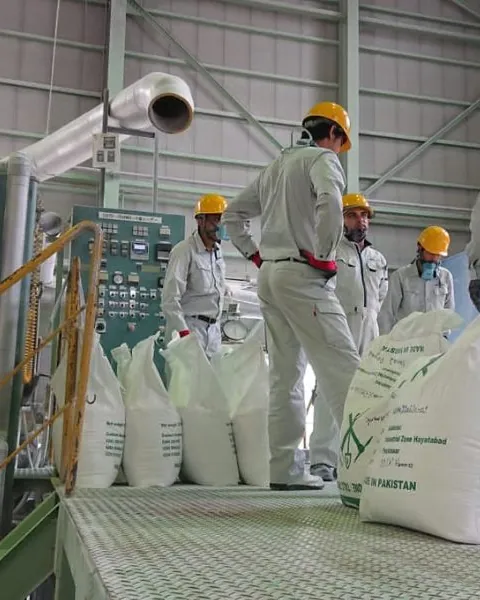
Covered storage, then container loading for export.
Learn more about storage & dispatch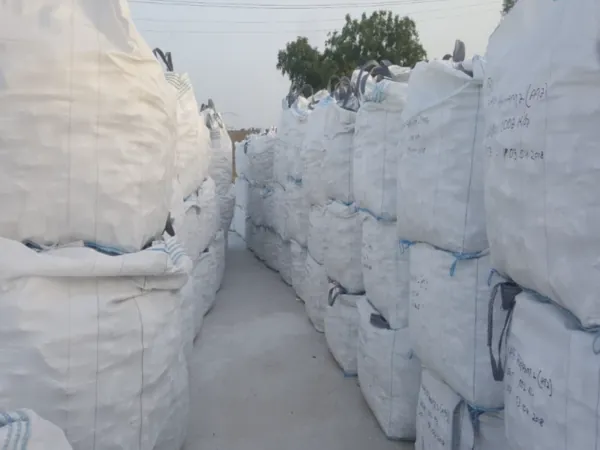


Intake & segregation
Lumps are received, stockpiled and kept separate by grade.
Truckloads of sorted lumps arrive at the Peshawar yard and are stockpiled by source and colour grade. Keeping grades apart at this stage is what allows a buyer's specification to be met later.
Crushing & screening
Lumps are reduced to a uniform feed size.
Crushers break the lumps down, and screens with conveyor stackers build stockpiles of crushed talc. The result is an even feed size for the mills.
Crushed talc stockpiled at a screening yard. Grinding
Hammer mill and Raymond mill lines produce mesh powder.
The meshing plants run hammer mill and Raymond-type roller mill lines. Crushed talc is ground and swept by air into a cyclone, where powder of the right size is collected. Oversize material goes back to the mill.
Talc is soft (Mohs 1), so the grinding task is mainly about controlling particle size and keeping the product clean.
Grinding mill and packed talc powder. 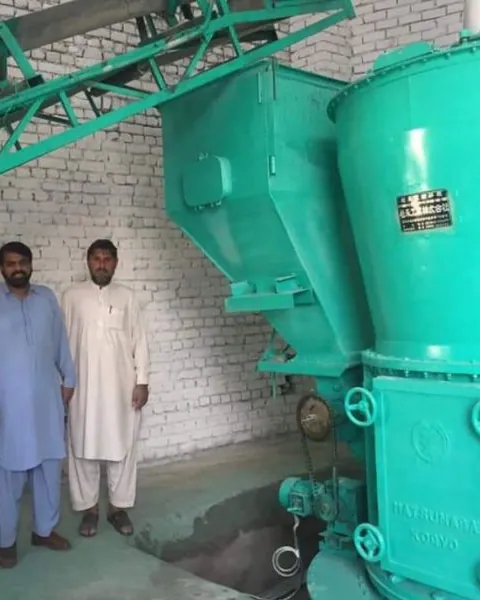
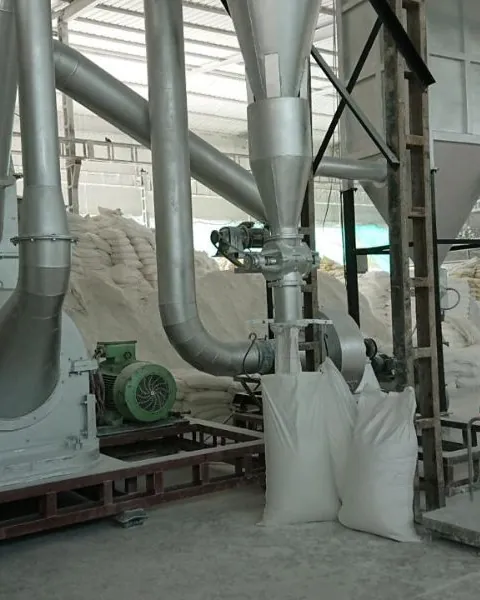
Classification & micronizing
Air classifiers cut the powder to finer particle sizes.
For finer grades, a micronizing classifier separates particles by size in an air stream. It is set to the mesh or micron target in the order.
Fine-grinding and classifying equipment. Dust collection
Cyclones and collectors keep powder in the process and out of the air.
Each mill line has cyclones and a dust-collection hopper. They recover fine product and limit airborne dust in the shed. Mills are serviced regularly to keep output consistent.
Grinding and dust-collection equipment in the processing shed. 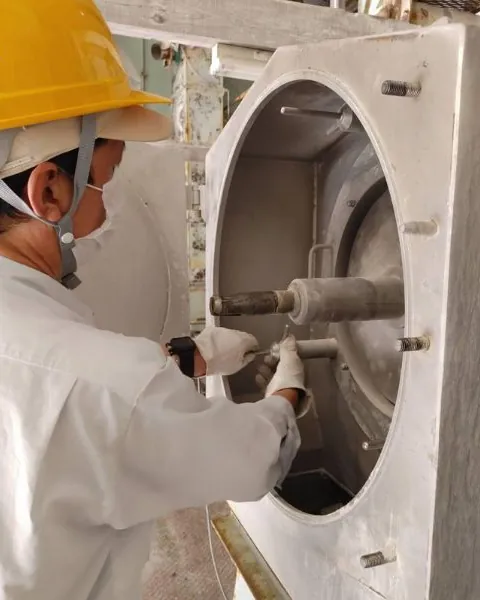
Testing
Samples go to SKZ Laboratory Peshawar.
Powder samples are checked for particle size, whiteness, sieve residue, bulk density, loss on ignition, silica and magnesia. The quality control page shows the full method.
Sample preparation in the laboratory. Packing
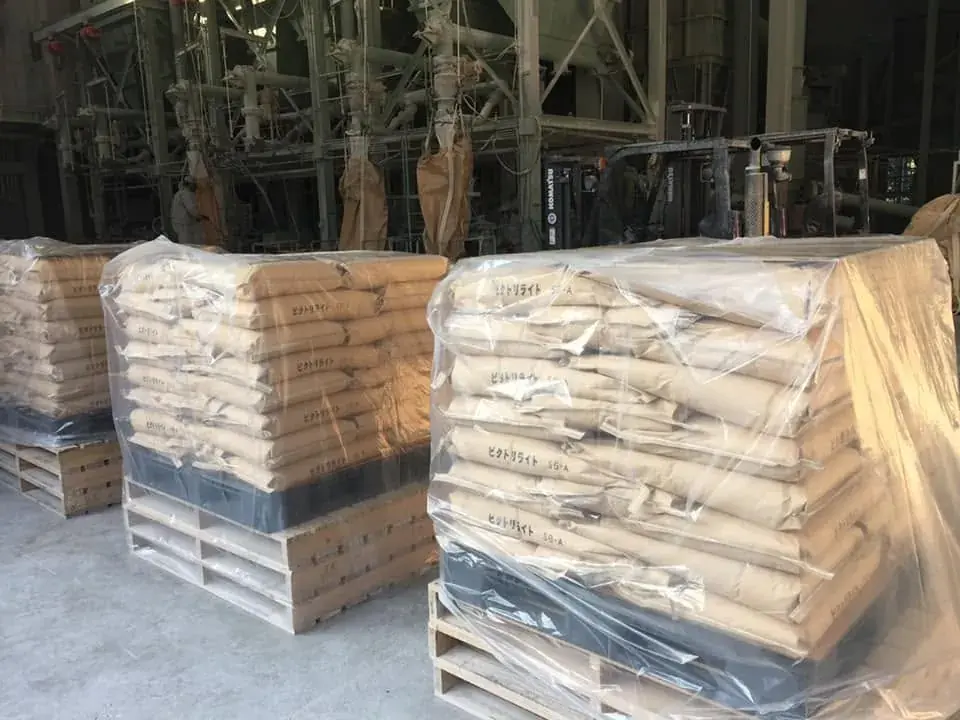
25 kg bags and jumbo bags, filled under dust collection.
Powder is filled into printed 25 kg SKZ Soap Stone / Talc Powder bags or into jumbo bags under a hopper with dust collection. Bags are stacked, wrapped and palletised as the order requires.
Talc powder bagging line. 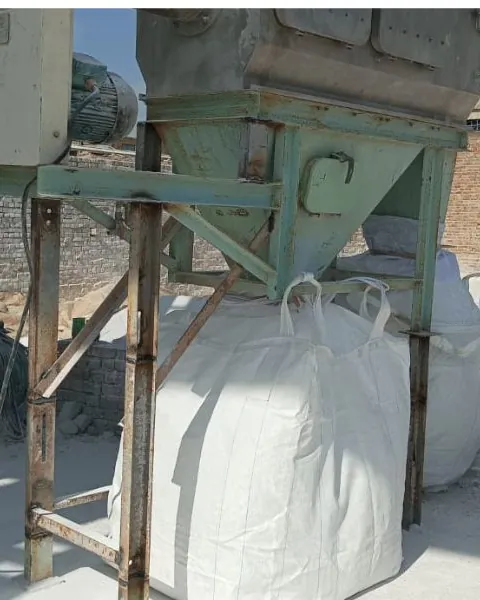
Storage & dispatch
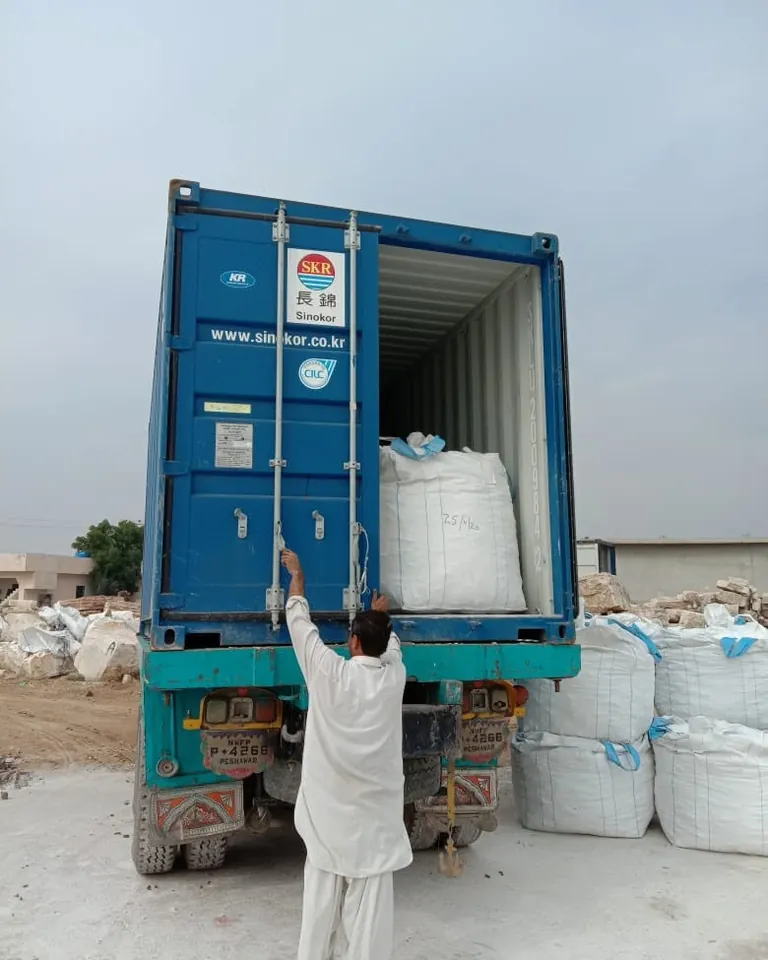
Covered storage, then container loading for export.
Filled bags are stored in rows in the warehouse and yard until dispatch. Export orders go by truck to the Karachi warehouse for final packing and container loading.
Bulk bags in storage. 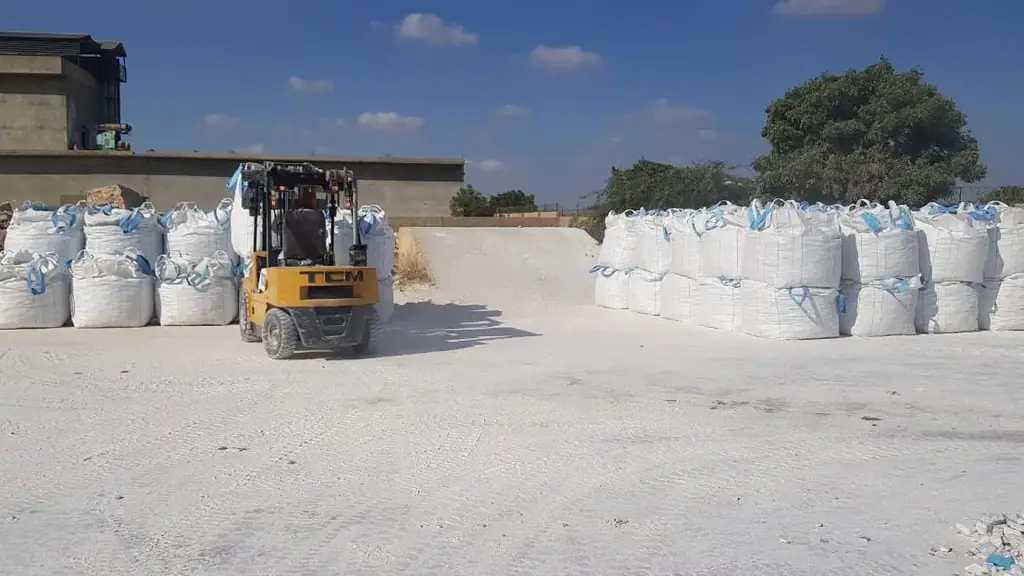


Enquiries
Need a specific fineness?
Tell us the mesh or D50 you work to, your whiteness and chemistry limits, and your packing. We will confirm what the plants can produce.