

Operations
Talc mining operations
PakTalc talc comes from surface and underground (tunnel) workings. Geologists first map the talc bodies. Miners then open adits and chambers and break the talc out selectively. At the mine, the material is hand-picked so that only talc goes on to the stock areas.
Overview
From survey to stock area in five stages

Exploration & geological survey
Mapping talc-bearing rock before any extraction starts.
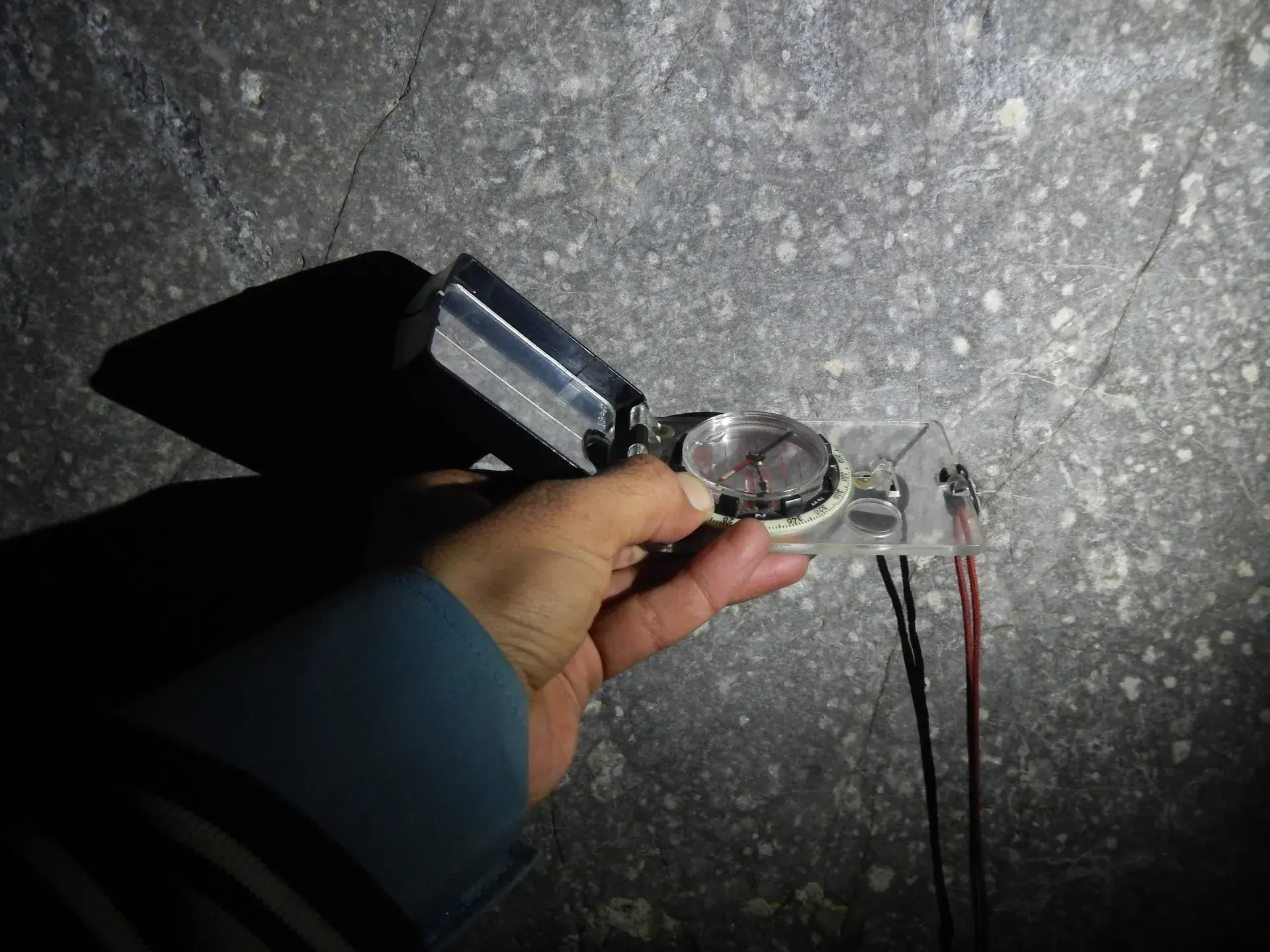
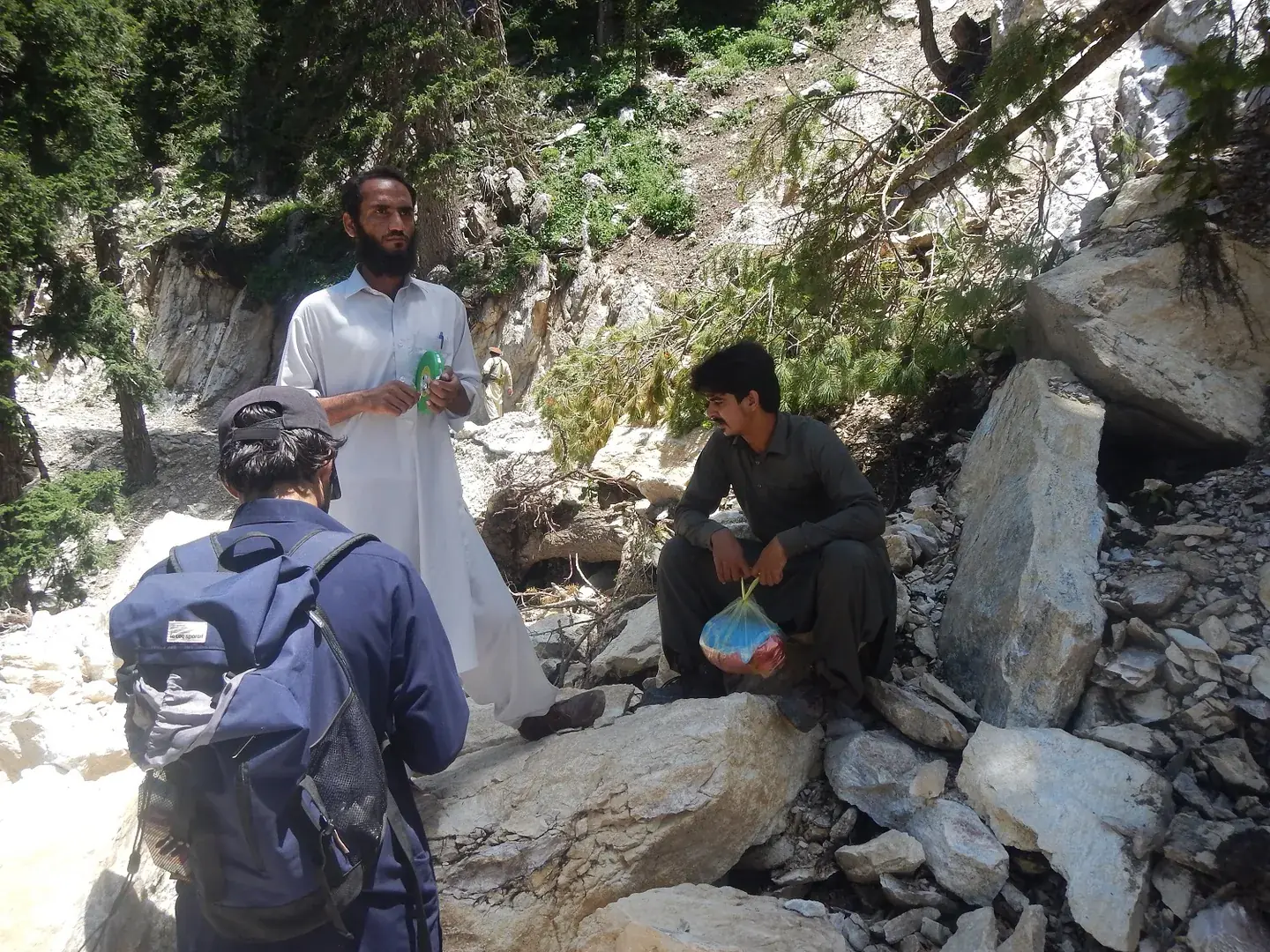
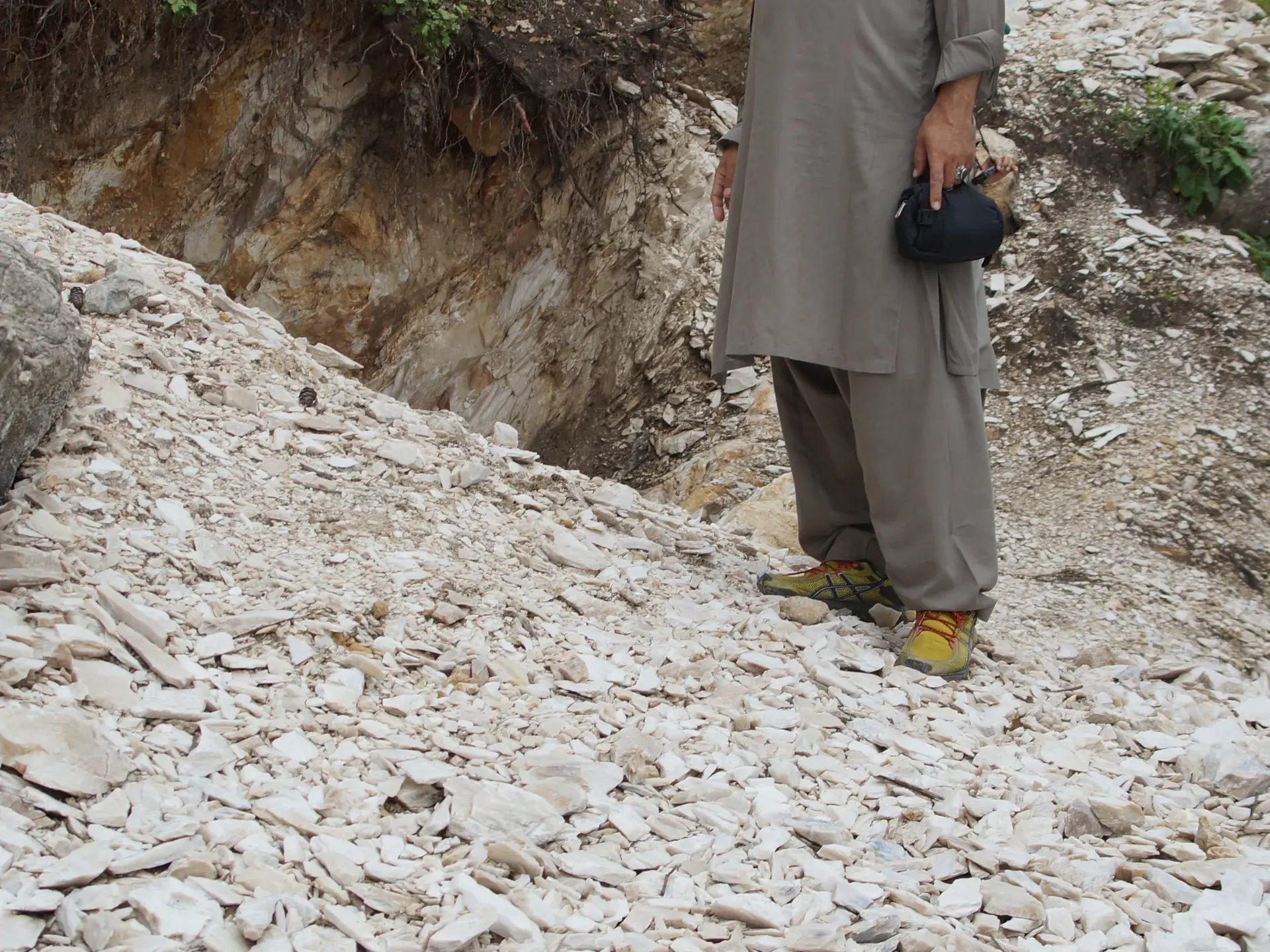
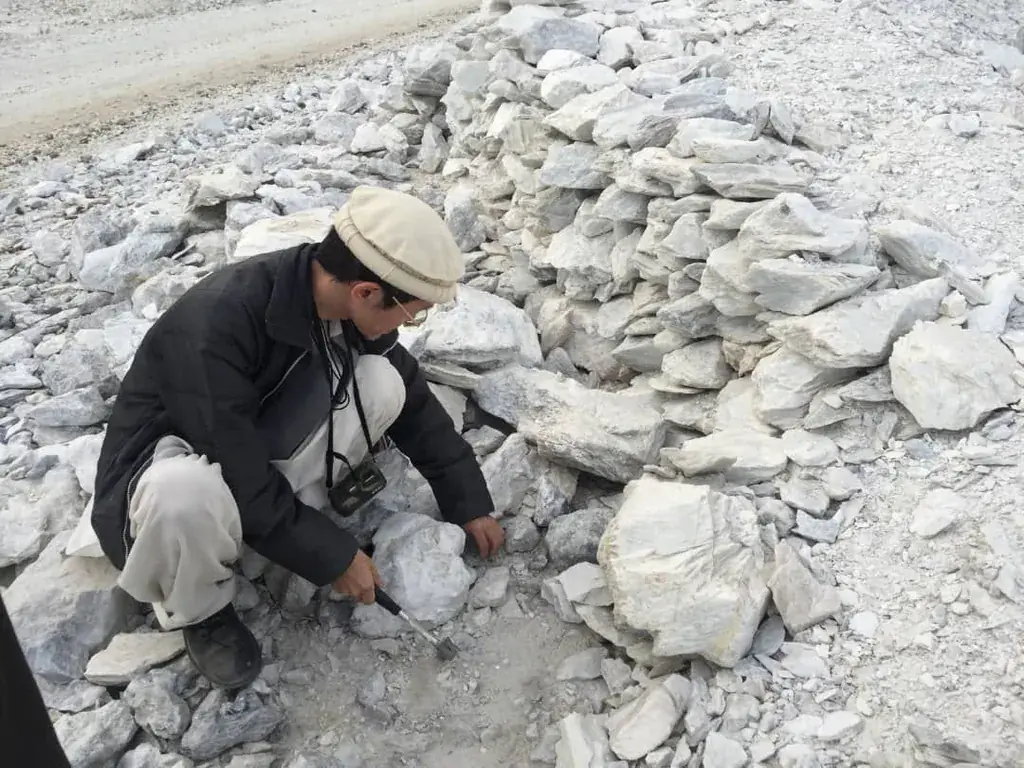
Field teams walk the mountain slopes and rock faces to trace talc-bearing zones. Geologists record structure and rock orientation with compass-clinometers, sample the white and pale zones, and log where the talc body runs.
This survey work decides where adits are driven. It also decides which faces are worked, so the mine takes the purest material and leaves waste rock in place.
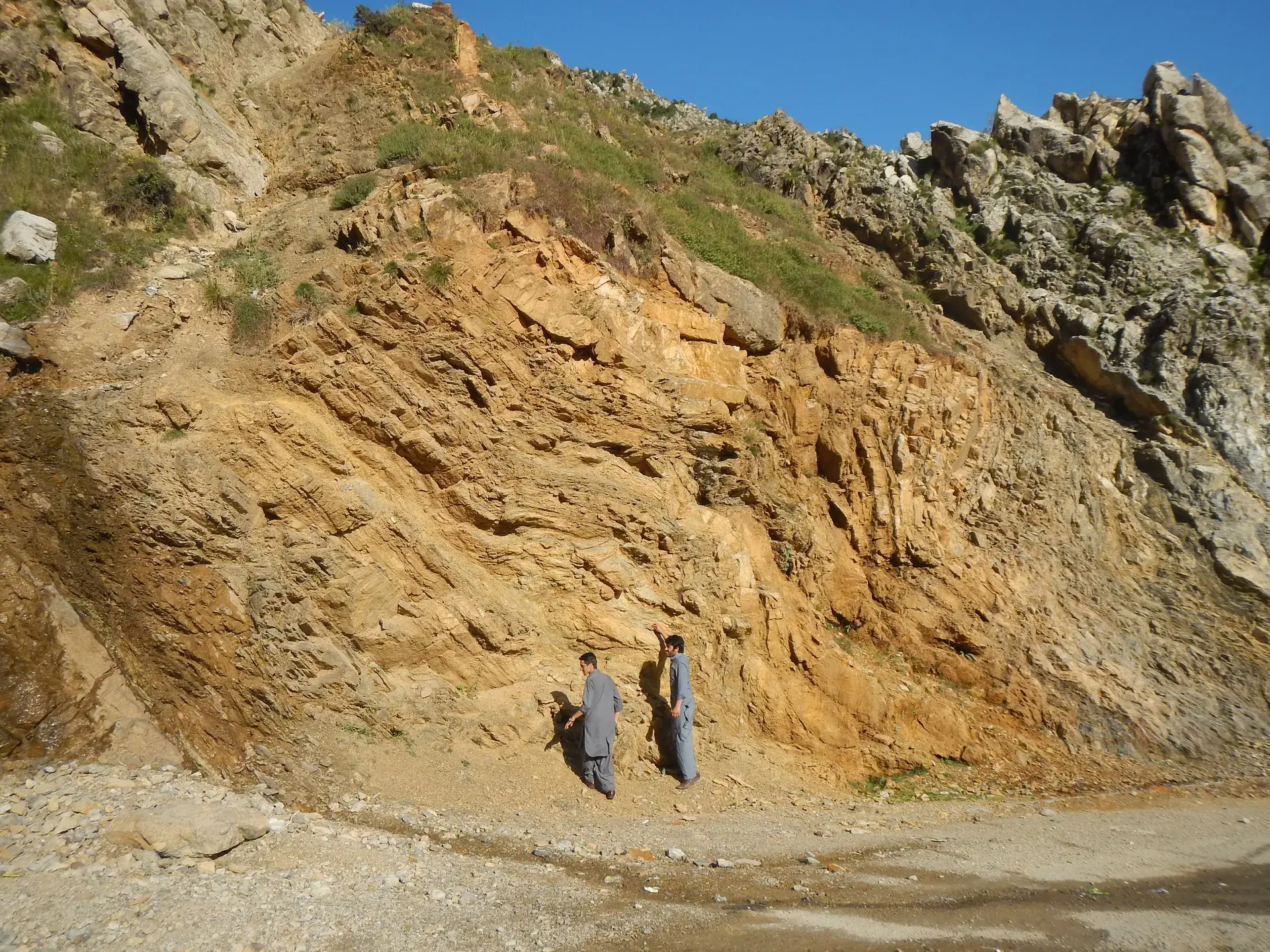
Geological survey of an exposed rock formation. 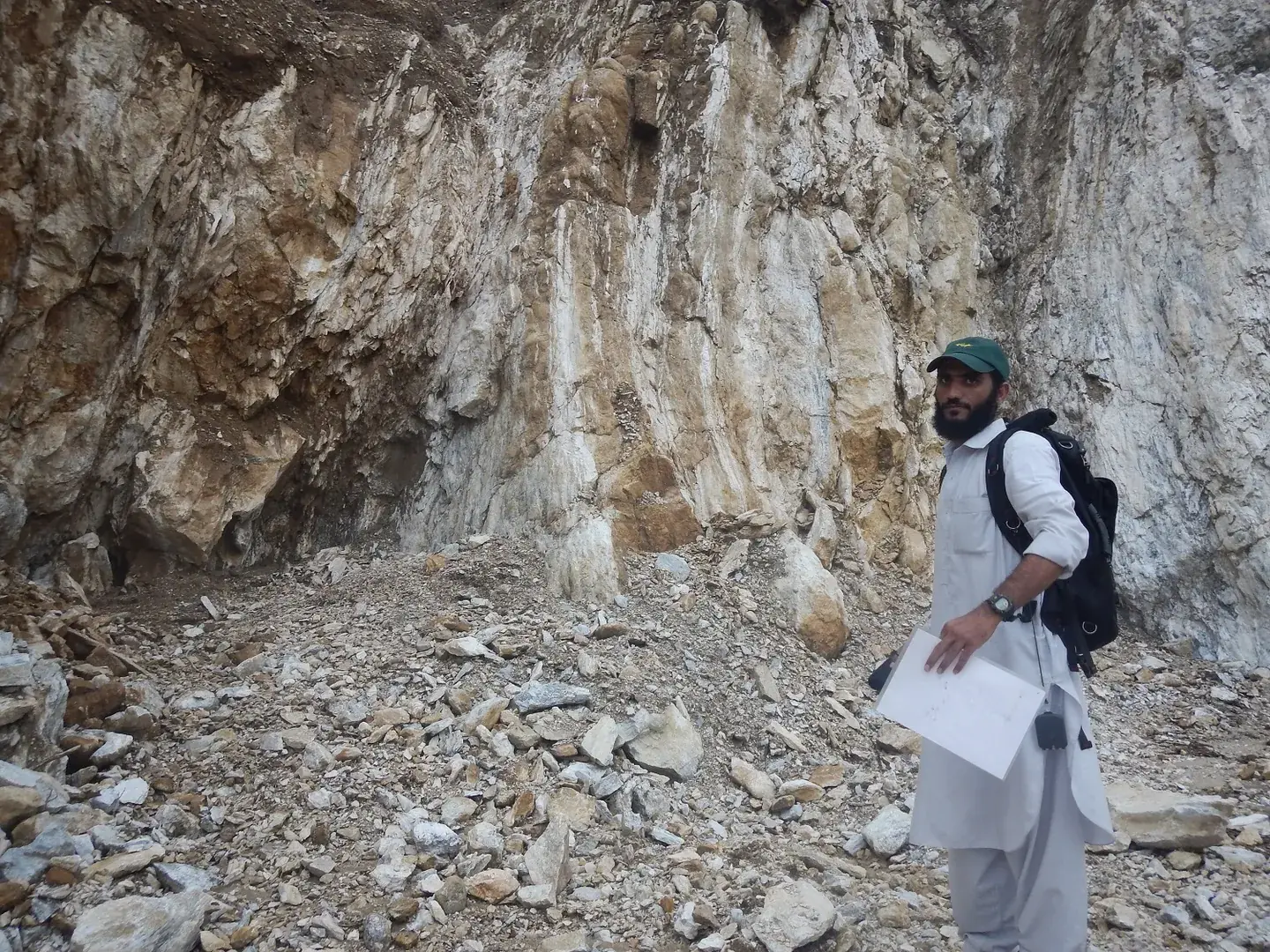
Mine development
Opening access to the talc body through adits and surface benches.
Where the talc outcrops, it is worked from the surface. Where it runs into the hillside, adits are cut into the rock face and supported with timber, with rail track and mine carts to bring material out.
The company's supply-chain records describe both open and tunnel mining for Pakistani talc, and open mining for Afghan talc.
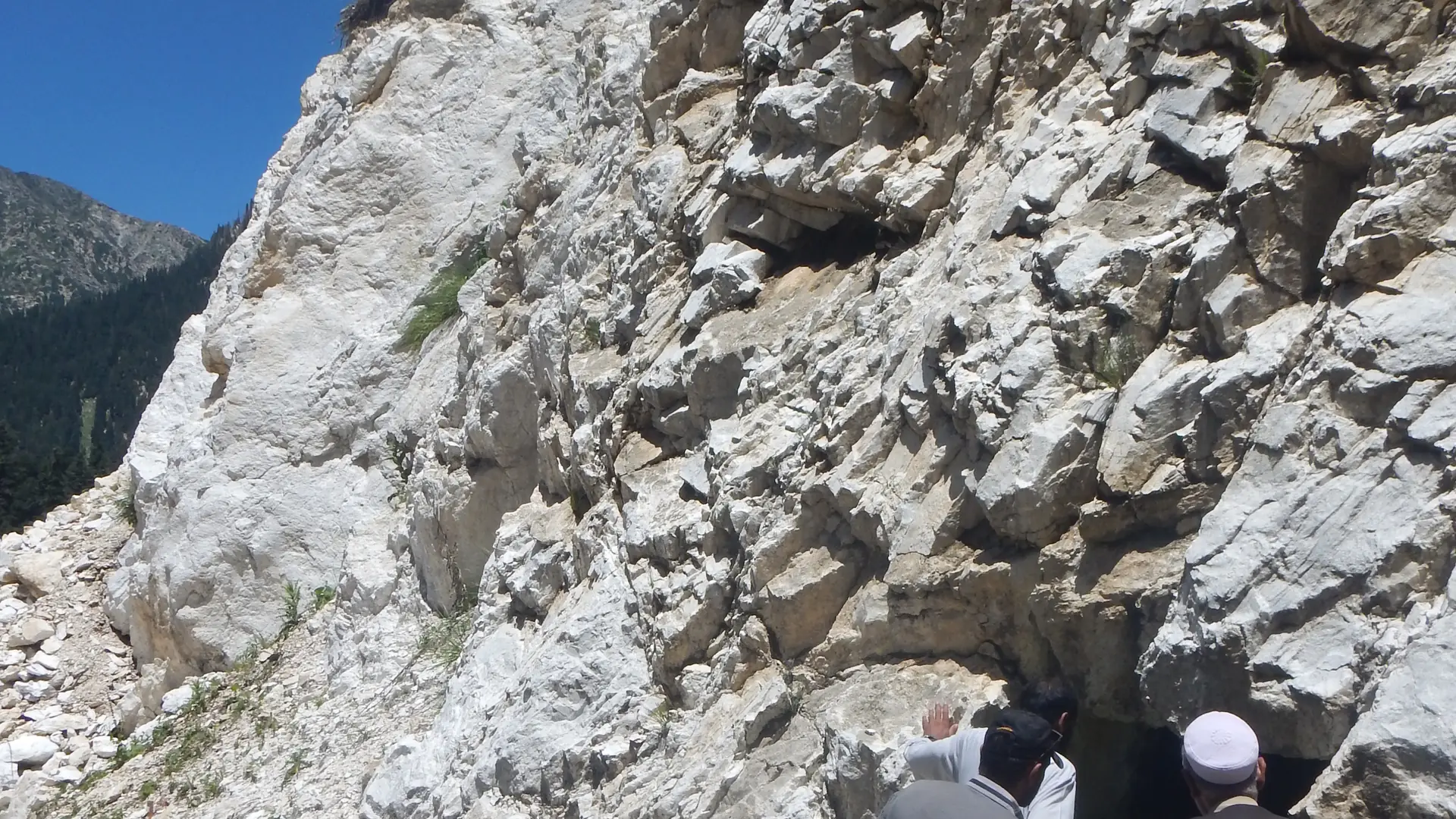
Entrance to an underground working in a white rock cliff. 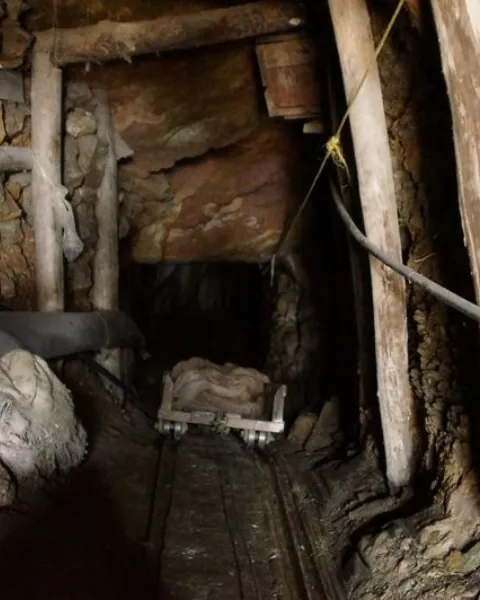
Extraction
Selective breaking of talc inside chambers and at the face.
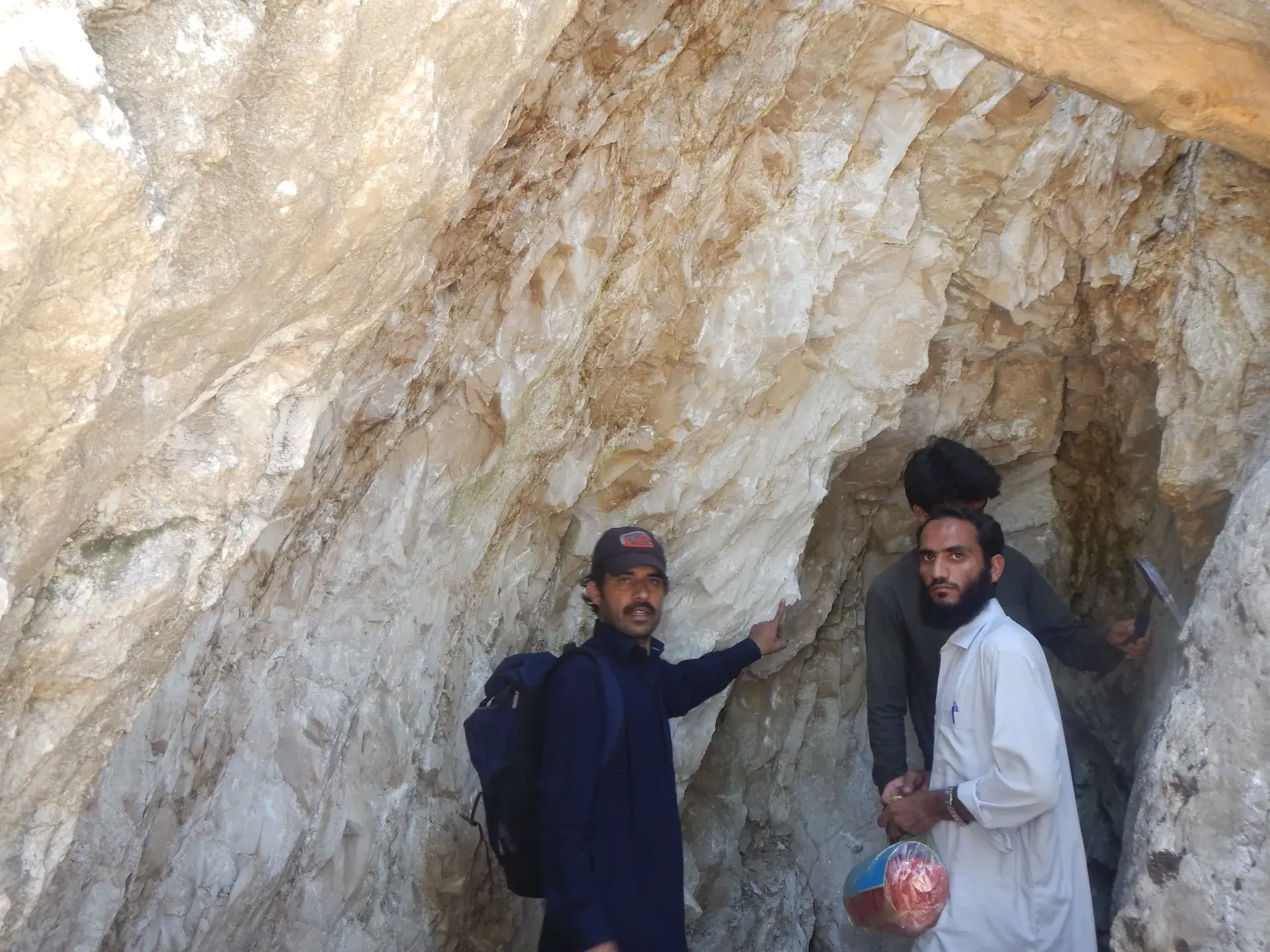
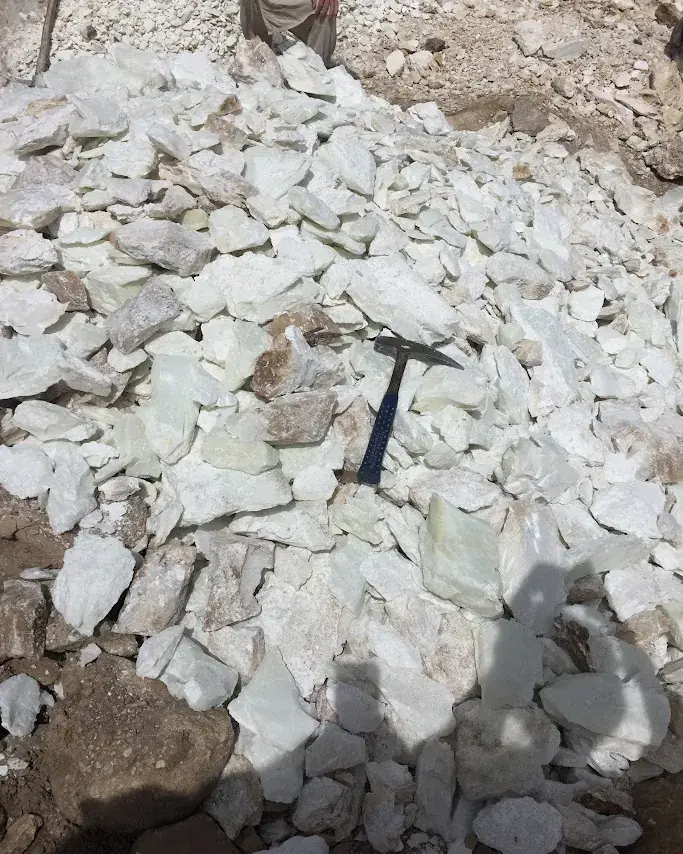
Inside the workings, crews break the white talc from the face and gather it on the chamber floor. Grey or stained rock is kept separate from white talc at the face, so less sorting is needed later.
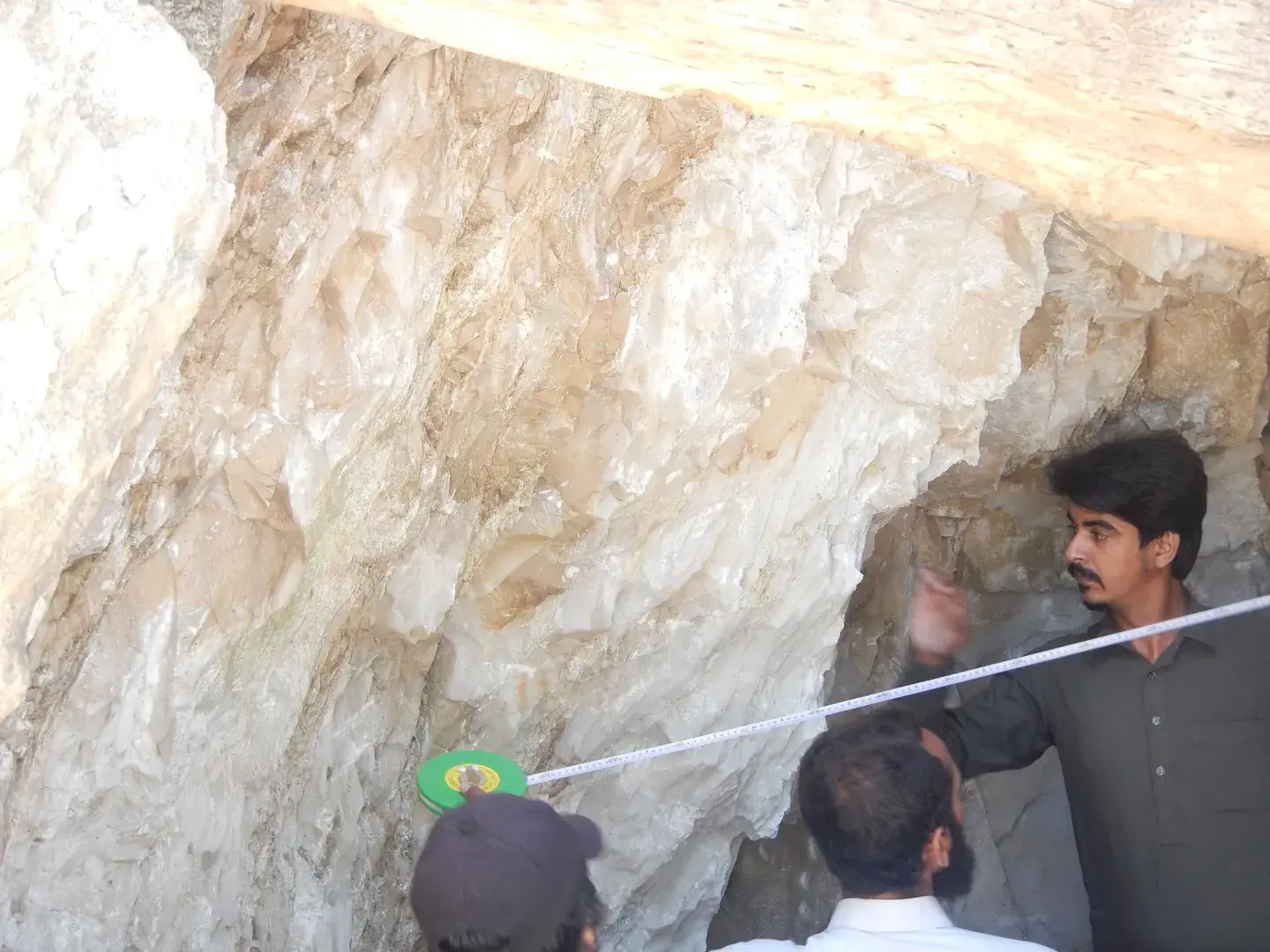
Survey teams measure the adits as they advance and inspect the walls. This keeps the working on the talc body and checks ground conditions.
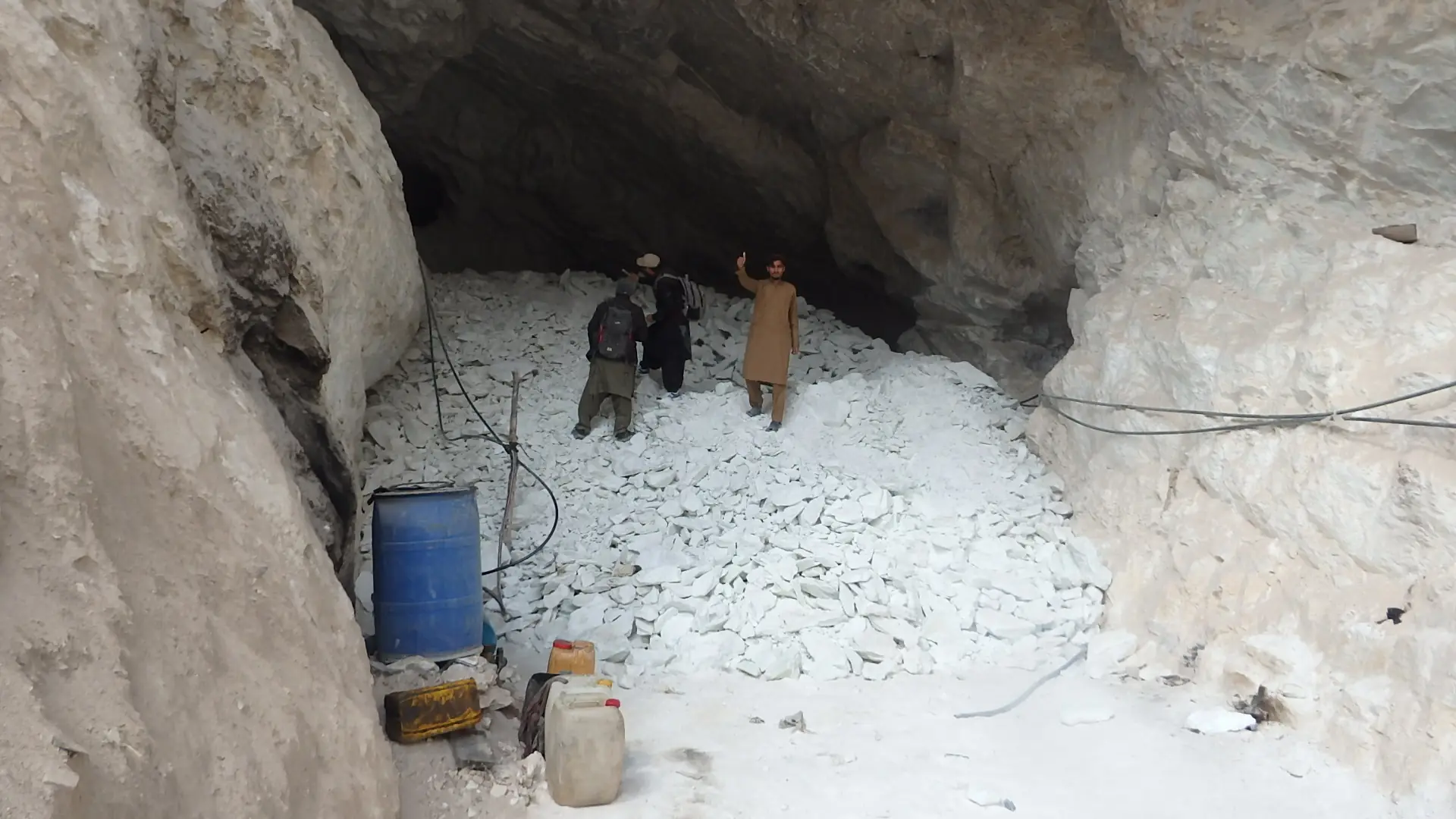
Underground extraction chamber. 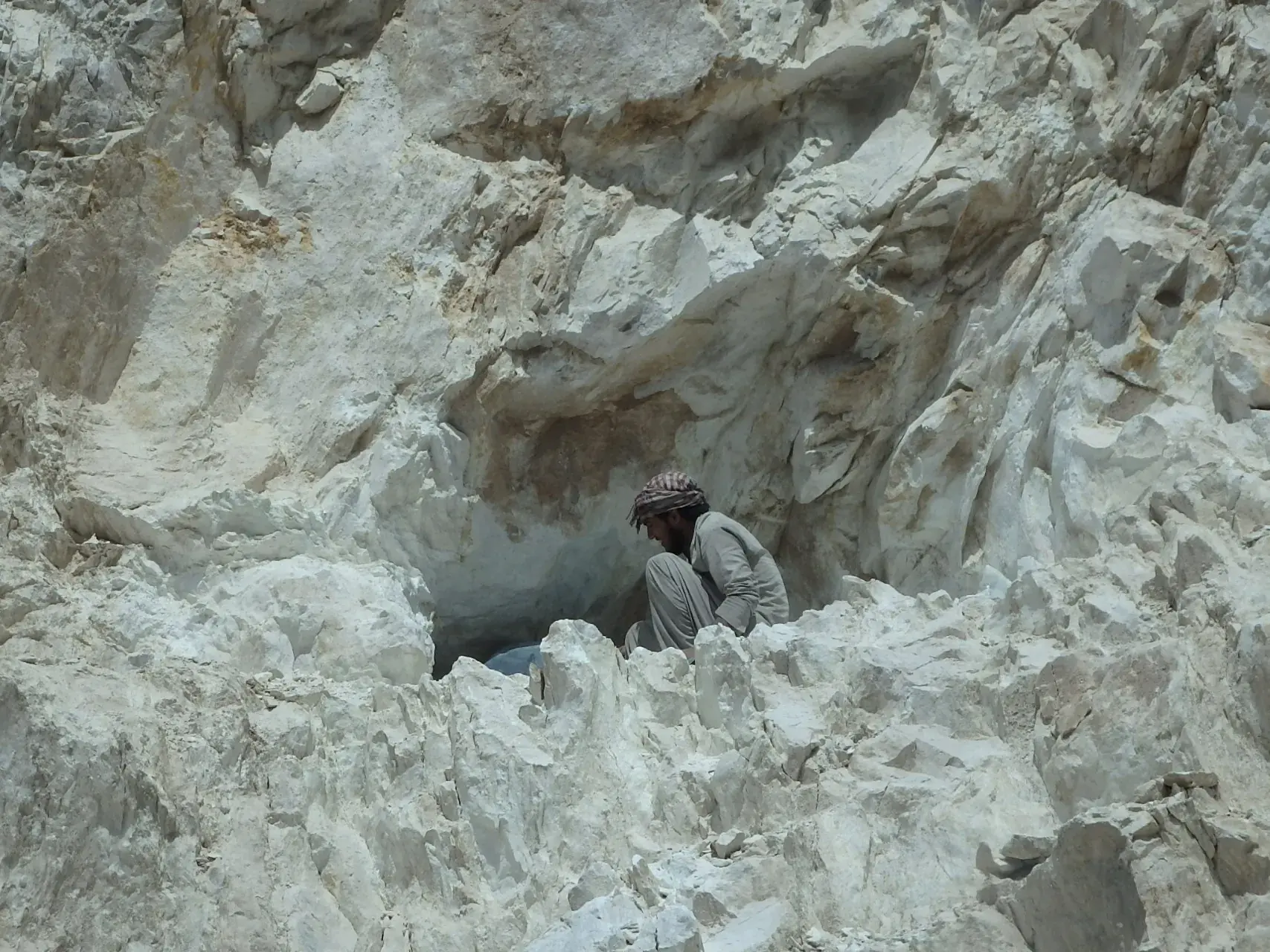
Hand sorting & selection
Talc lumps graded by eye and by hand before they leave the yard.
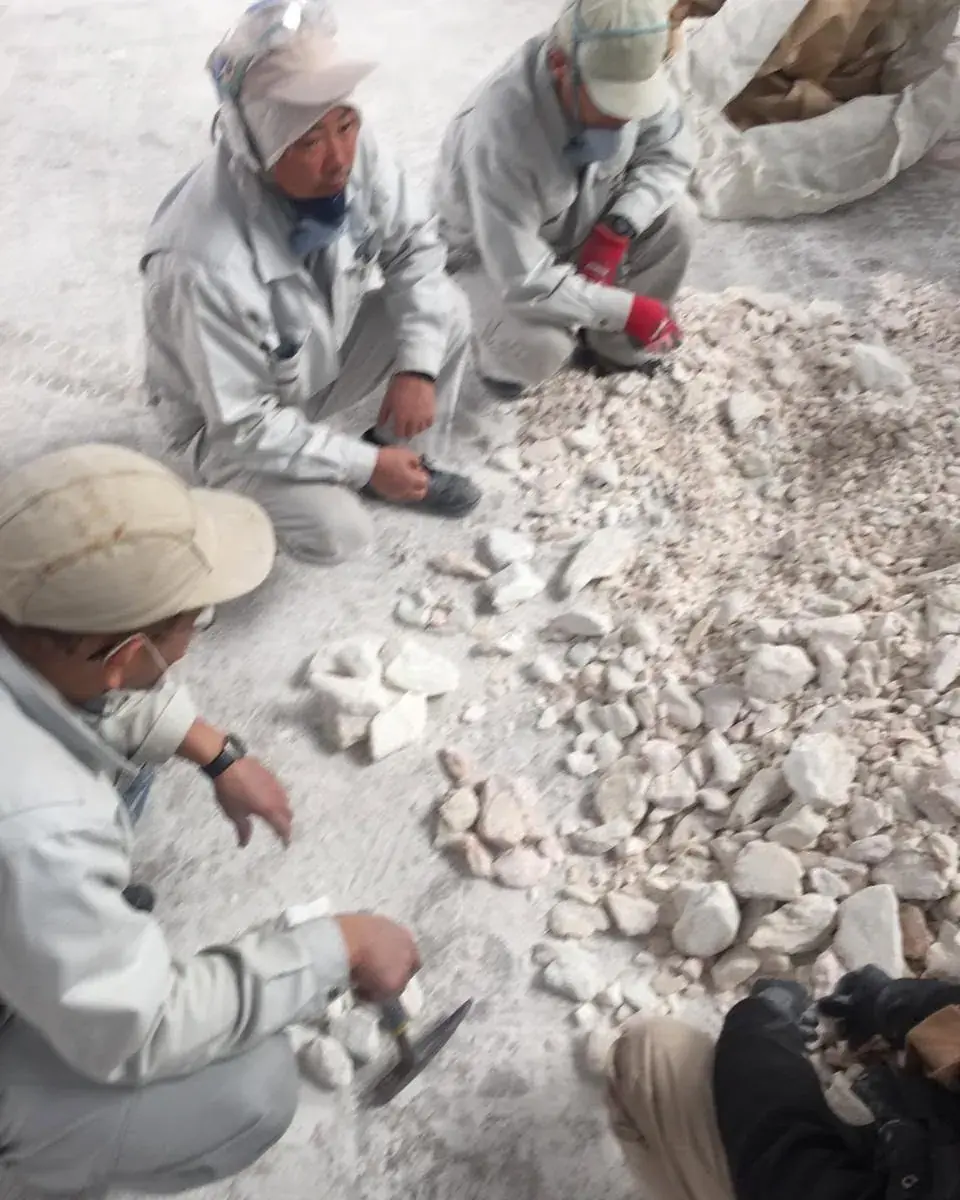
Broken talc is spread out in walled yards. Workers in hard hats and safety vests pick through it by hand, taking out foreign rock and separating the lumps by colour and size.
Inspectors check the sorted piles before the lumps are filled into bulk bags. Hand sorting is still the most reliable way to separate the colour grades — white, grey, green and coffee — that buyers specify.
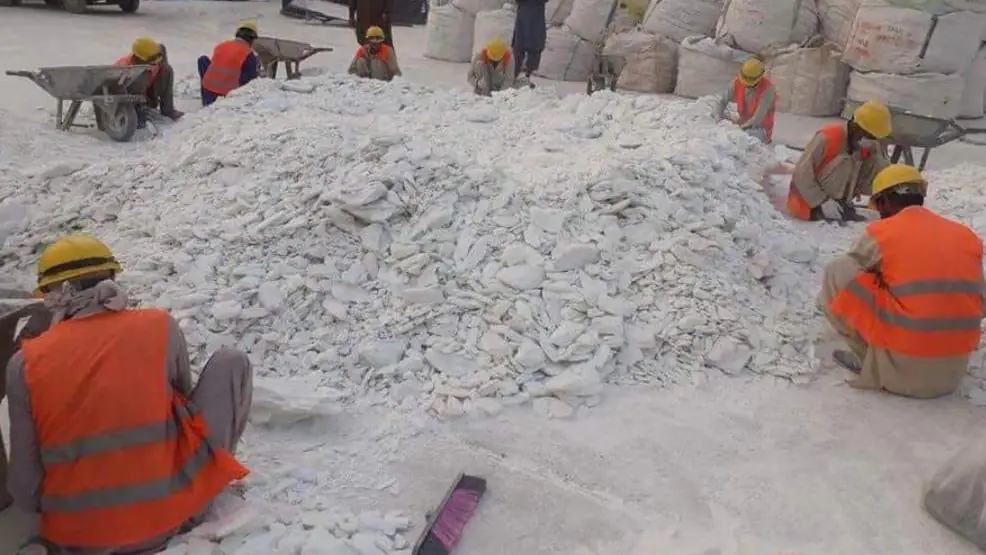
Hand-sorting talc lumps before milling or bagging. 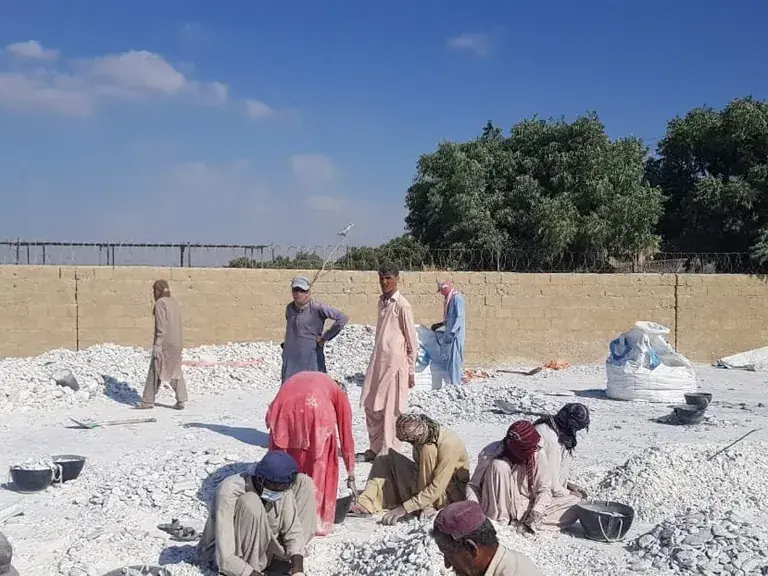
Transport to processing
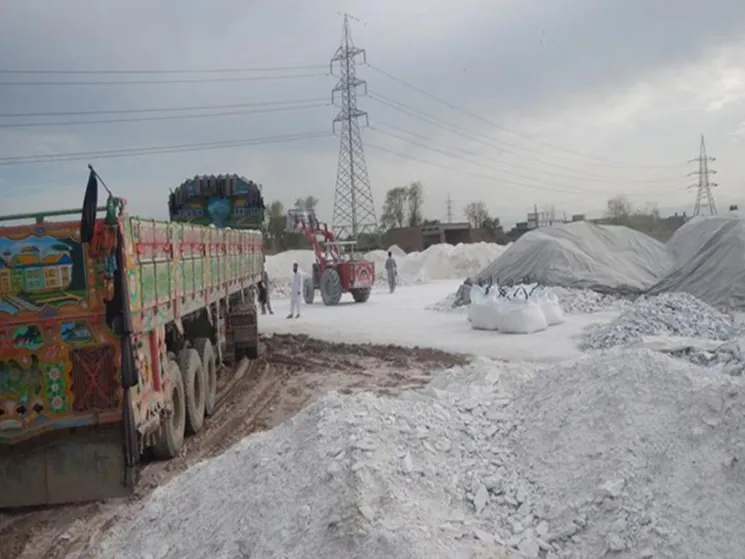
From mine stock areas to the Peshawar warehouse.
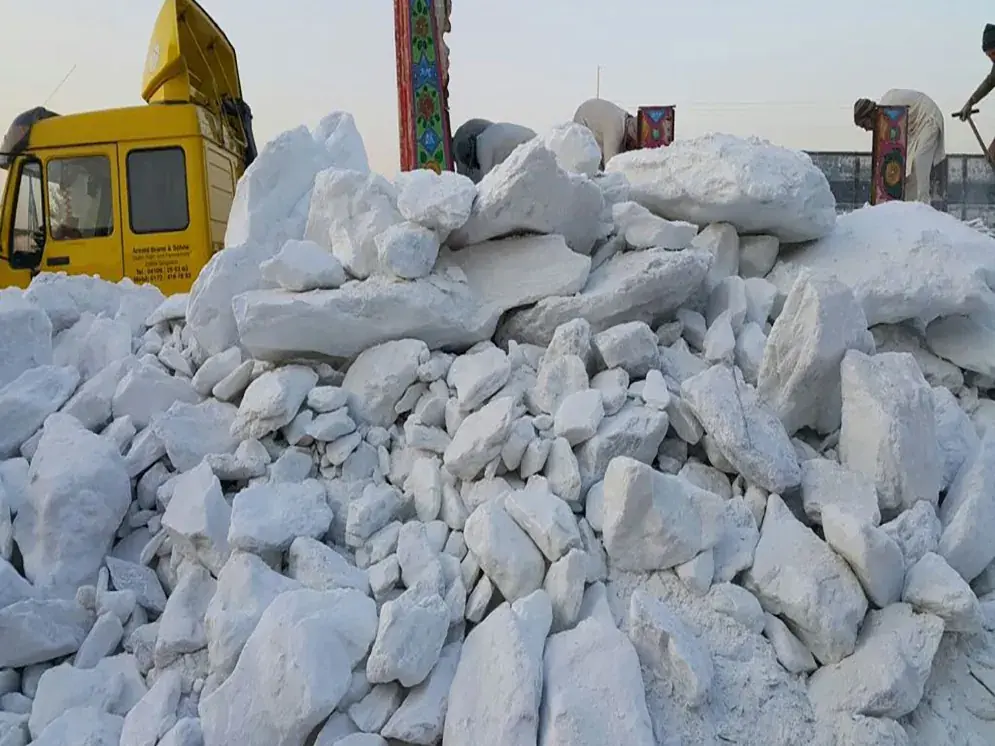
Sorted lumps are loaded onto trucks at the mine stock areas. Afghan talc moves through the company's stock area and processing plant in Jalalabad and crosses at Torkham. Pakistani talc goes from its mine stock areas direct to Peshawar.
In Peshawar the talc is stocked and segregated by grade. From there it is either ground into powder or sent on as lumps to the Karachi warehouse for packing and export.


What happens next
From the stock area to the mill
In Peshawar the talc is stocked by grade. It is either ground into powder at the meshing plants or sent to Karachi as lumps. The processing page covers the rest of the journey.

Enquiries
Discuss your talc requirements
Send your talc specification (form, mesh or lump size, colour grade, quantity and destination) and we will reply with a proposal.